What is Geotextile Fabric Soil and Drainage Guide 2024
-
 13/10/26
-
 Vodaland Canada

Geotextiles might not be a common household name, but they play an indispensable role in modern construction and environmental management across Canada.
In short, these permeable fabrics are engineered specifically for landscaping and civil engineering applications. They are essential for enhancing soil stabilisation, preventing erosion, and improving the efficiency of drainage systems in our varied climate. In this post, we will explore what geotextile fabrics are, their various types and functions, and why these construction materials are a "must-have" for projects ranging from residential backyards to large-scale municipal infrastructure.
Types of Geotextiles Geotextiles are permeable fabrics used to manage soil characteristics in several ways—separation, filtration, reinforcement, protection, and drainage. Depending on the project requirements, different manufacturing styles are used:
-
Woven Geotextiles: Created from woven fibres, these geotextiles are prized for their high tensile strength and load-bearing capacity.
-
Non-woven Geotextiles: Produced by bonding synthetic fibres (often continuous filament yarn) through mechanical, chemical, or thermal processes. These are generally the "go-to" for filtration and drainage.
-
Knitted Geotextiles: Manufactured by interlocking loops of yarn, these offer unique flexibility for specialised engineering applications.
Core Functions
-
Separation: A primary role of geotextiles is to keep different soil layers and materials from mixing. In Canadian road construction, this is vital to maintain the integrity of the base material against shifting subgrades.
- Filtration: These fabrics allow water to pass through while retaining fine soil particles. This prevents silting and ensures drainage systems don't become clogged over time.
- Reinforcement: By adding structural strength to the soil, geotextiles increase load-bearing capacity—a critical factor for the long-term stability of retaining walls, embankments, and foundations. For many homeowners, this fabric serves as the essential first layer in a GeoCell backyard stabilization project, ensuring the heavy-duty grids remain level over time.
- Protection: Geotextiles provide essential erosion control, defending the land against harsh environmental factors and mechanical stress.
- Drainage: They facilitate consistent water flow, helping to prevent waterlogging. They are frequently used alongside other drainage products to manage runoff in agricultural and construction projects.
Common Applications in the Canadian Landscape Geotextiles are used to separate soil layers and reinforce base materials in the construction of roadways, highways, and retaining structures. They improve overall structural stability and help maintain integrity through the seasons.
The "No-Geotextile" Scenario: Imagine a new driveway or road built without a geotextile layer. Over time, particularly during the spring thaw, the soft soil beneath mixes with the gravel base. This leads to uneven surfaces, ruts, and the dreaded Canadian pothole. Without geotextiles to assist with drainage, water accumulates under the surface, weakening the structure and leading to premature (and expensive) failure. This is why professional contractors always include fabric when following our driveway and garage water drainage guides.
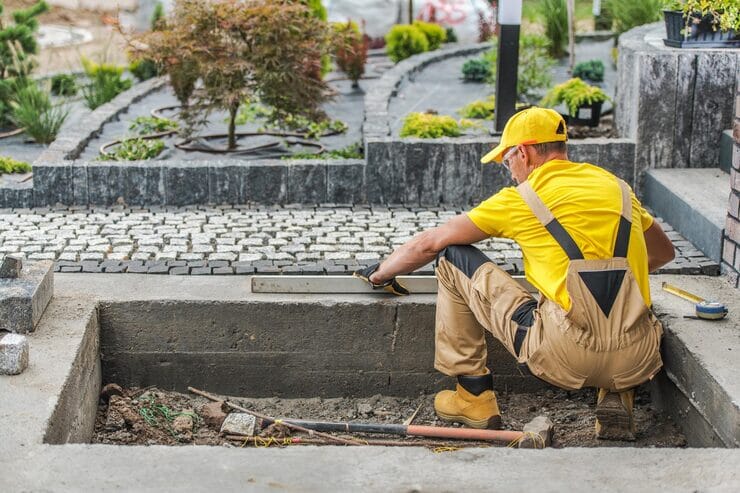
In landscaping projects, these fabrics are widely used for soil stabilisation under walkways and patios. In gardens and parks, they also serve as a high-performance barrier to suppress weed growth.
The Sloped Garden Example: Picture a beautiful tiered garden on a slope. Without a geotextile layer to manage erosion, heavy rainfall or melting snow will eventually wash away the precious topsoil. This doesn't just ruin the aesthetic; it can risk the stability of nearby structures.
Geotextile Fabrics from Vodaland Canada
-
8oz Non-Woven Geo Textile Pro Fabric: Our 8oz Non-Woven Geo Textile Pro Fabric is manufactured from UV-protected, industrial-grade polypropylene. Featuring a tensile strength of 112 lbs and puncture resistance of 307 lbs, this robust yet flexible fabric is ideal for demanding Canadian farming, gardening, and road stabilisation.
- 4oz Non-Woven Geo Textile Pro Fabric: The 4oz Non-Woven Geo Textile Pro Fabric sets the benchmark for lightweight, durable geotextiles. With a tensile strength of 33 lbs and puncture resistance of 67 lbs, it is designed to work seamlessly with geogrids and pavers. You can explore our full collection of geotextiles and ground mesh to find the specific weight required for your terrain.
- Multi-Purpose Ground Mesh: Durable and easy to install, our versatile ground mesh is resistant to mildew, rot, and tearing.
- Geo Agro Textile Fabric: Our Agro Geo Textile Fabric is a versatile solution for agricultural needs. Available in 1.6 m x 100 m rolls (approx. 1,750 sq. ft.), this non-woven textile is perfect for protecting sensitive plants and shrubs during extreme cold snaps.
Trust Vodaland Canada for Advanced Terrain Solutions
At Vodaland, we are dedicated to helping you transform your landscape into a durable, sustainable sanctuary. Whether you are managing a residential renovation or a commercial civil project, our range of drainage and stabilisation solutions has you covered.
Choosing Vodaland means choosing innovation in water management. With over 24 years of global experience and ISO 9001 certified production, our products undergo rigorous quality control to ensure they withstand the Canadian climate. We pride ourselves on providing personalised support and direct expert advice.