Soil & Slope Stabilization Techniques for landscaping | Vodaland Canada
-
 13/10/26
-
 Vodaland Canada

Methods of soil and slope strengthening
Slopes are naturally prone to erosion, which leads to gradual destruction and potential safety hazards. To prevent this, it is necessary to ensure robust protection. In Canada, where seasonal freeze-thaw cycles and heavy spring snowmelt can accelerate soil instability, choosing the right reinforcement method is critical.
There are several methods for strengthening slopes and embankments. The best choice depends on many factors: the angle of inclination, the presence of groundwater, soil composition, and the proximity of water bodies at the foot of the slope.


Determining the right approach by slope angle
First, assess the angle of inclination. If the slope does not exceed 8%, you can often rely on strategic planting. Shrubs, trees, and grasses have root systems that contribute to soil compaction in both vertical and horizontal directions.
If plants cannot be used, burying stones, concrete blocks, or logs in the upper soil layers can provide stability while serving as a decorative element for your property.
Planting for slope stability
Ground cover species and plants with well-developed root systems are best suited for slope reinforcement. Depending on your specific site goals, consider hardy perennials such as:
- Shrubs and Trees: Juniper, cedar, sea buckthorn, hawthorn, snowberry, pine, and rowan.
- Flowering and Fruiting: Tree peony, lilac, blackberries, and dog rose.
Beyond their utilitarian function, these plants act as a beautiful decoration for your landscape, particularly when flowering species are integrated into the design.
Reinforcement using special structures
When the angle of inclination is too steep for traditional planting alone, more robust engineering is required. These reinforcement methods include:
- Geotextiles and Geomats
- Gabion structures
- Lawn grates and GeoCells
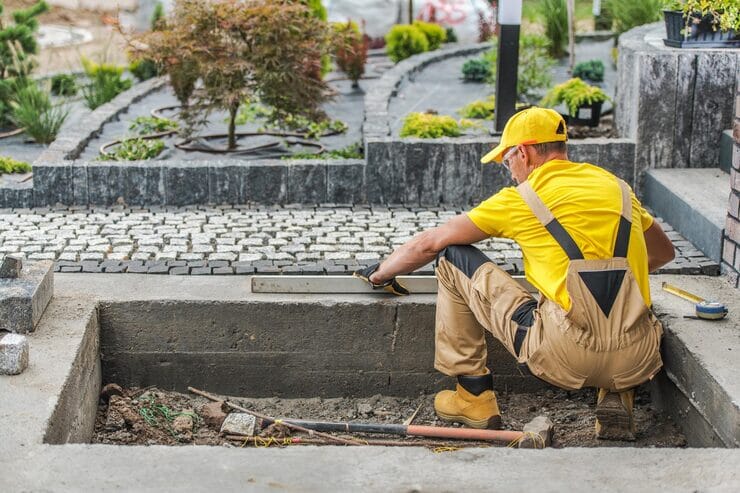
Slopes can also be reinforced by erecting retaining walls made of limestone, concrete slabs, stone, or brick. These structures perfectly resist soil erosion without interfering with plant growth. For a wall to be effective, the soil must be strong enough to support the structure. Generally, the wall should be at least 1m high, with a thickness of at least 1/3 of its height.


When building these, never forget about the removal of rainwater and groundwater; a reliable drainage system—such as the trench drains offered by Vodaland—is essential to prevent hydrostatic pressure from collapsing the wall.

The role of geotextiles in slope strength
To strengthen slopes in recent years, geotextiles have become an industry standard. This rolled, non-woven material is made of polypropylene or polyester fibers and is engineered to endure harsh environments.
Key properties of geotextiles include:
-
Resistance: Not prone to rot, fungi, or mold.
-
Durability: High resistance to ruptures and punctures.
-
Climate Resilience: Frost-resistant and capable of stretching up to 120%.
-
Protection: Waterproof and resistant to aggressive chemical environments.
Geotextiles provide the soil with the tensile strength it lacks on its own, allowing it to withstand significant loads. Moreover, they prevent the mixing of different soil layers after heavy rainfall, maintaining the integrity of the slope. To reinforce a slope properly, the material is laid in layers within the soil mass, creating a reinforced structure tailored to the specific load requirements of the site.
Choose Vodaland Canada for your reinforcement needs
Whether you are looking for high-strength GeoCells to stabilize a steep bank or professional geotextiles for a commercial project, Vodaland Canada provides the engineering-grade materials required to protect your land.
If you are dealing with a shifting slope or recurring erosion, contact us today. Our team can help you select the right reinforcement system to ensure your property remains stable and secure for years to come.